
Melbourne Previous Resident Sources
No single roll lists every person who occupied a Melbourne address. The strongest trail joins a parcel's stable legal description to records created at different dates. The Brevard County Property Appraiser search supplies the current owner, parcel number, situs address, legal description, and recent sale references. A situs address is the physical parcel address; the owner's mailing address is where tax notices go. Those can differ.
| Record source | Local coverage | Access point | Evidence preserved |
|---|---|---|---|
| Acclaim Official Records | January 1, 1981 to present | Clerk web index, copies, mail, or counter | Transfer parties, dates, book/page, and legal description |
| Earlier deed books | Before 1981 | Clerk books, microfilm, and archive help | Older owners and the title chain |
| Hill-Donnelly criss-cross | Selected years, 1969 to 2006 | Central Brevard Library | Street number, listed subscriber, and phone |
| Polk Melbourne directories | Selected years, 1984 to 1999 | Central Brevard Library | Name, spouse, work, and address |
| Federal census | Public schedules through 1950 | National Archives and library databases | Household, relationship, occupation, and tenure |
| Permits and code files | Coverage varies | City or county office by jurisdiction | Dated work, applicant, contractor, and case events |
Start with deeds for ownership, a Hill-Donnelly volume for an address-first occupant clue, or a census when the event falls within a public census year. The directory runs have real gaps, so a missing year is not proof that nobody lived there. Likewise, a deed names title holders, not each person in the home. Previous residents become more reliable only when two independent sources point to the same person, address, and period.
Fix the Melbourne Parcel First
Copy the parcel or account number, the complete legal description, and the latest book/page reference from the property card. A legal description identifies land by subdivision, lot and block, or metes and bounds. It remains useful when the street number, direction, spelling, or postal city changes. Save the municipality or taxing-district field too. A Melbourne mailing line does not by itself prove that the land sits within incorporated Melbourne.
The card's sale history may link to a recorded instrument. Use that link as a lead, then inspect the deed itself. The tax roll can lag a newly recorded transfer, and a homestead exemption supports a principal-residence claim without proving that all named owners still occupy the home. For a current street-wide inquiry, use the Melbourne street directory workflow; the past-resident task stays tied to one parcel.
Walk Melbourne Deeds Backward
The Acclaim Official Records Search is the online grantor-grantee index. It anchors previous residents to a recorded parcel trail. A grantor gives or sells an interest; a grantee receives it. The chain of title is the linked sequence of those transfers. Search names as LAST, FIRST, use less text when needed, and test every spelling form. Compare the legal description on each candidate deed rather than trusting an address field.
- Open the current parcel card and note its owner, legal description, parcel ID, and latest sale book/page.
- Read the present owner's purchase deed. Confirm the land description and record the seller, recording date, instrument number, and book/page.
- Search that seller as a grantee in an earlier period. Open likely deeds and match the same land.
- Repeat the seller-to-earlier-purchase link. Keep execution and recording dates distinct, and do not treat mortgages as transfers.
- At the online cutoff, contact Land Records at 321-637-2004 for older grantor/grantee books, deed books, or microfilm.
- Grantor and grantee
- The party giving an interest and the party receiving it.
- Chain of title
- The connected run of recorded transfers for the same land.
- Legal description
- The land description that can bridge old and new street labels.
- Book and page
- The Clerk's filing location for a recorded document.
Melbourne Records Before 1981
Acclaim's index and eligible online images begin on January 1, 1981. That date is an internet boundary, not the start of Brevard land records. When a previous-residents trail reaches it, preserve the last known book/page and legal description. Then use the Clerk's counter, copy request channels, older deed books, or microfilm. Online, mail, and counter requests are all documented by the Clerk's official-record copy service.
Counter records are official. A public index entry or document can exist even when an image is blocked from remote display. Ask for the specific book/page or instrument rather than a broad search. Brevard lists ordinary copies at $1 per page and certification at $2 per document, but confirm the current schedule before ordering.
The Clerk's copy page shows how earlier material continues beyond the web portal.
View the Brevard Clerk copy channels and requirements before choosing online, mail, or counter service.
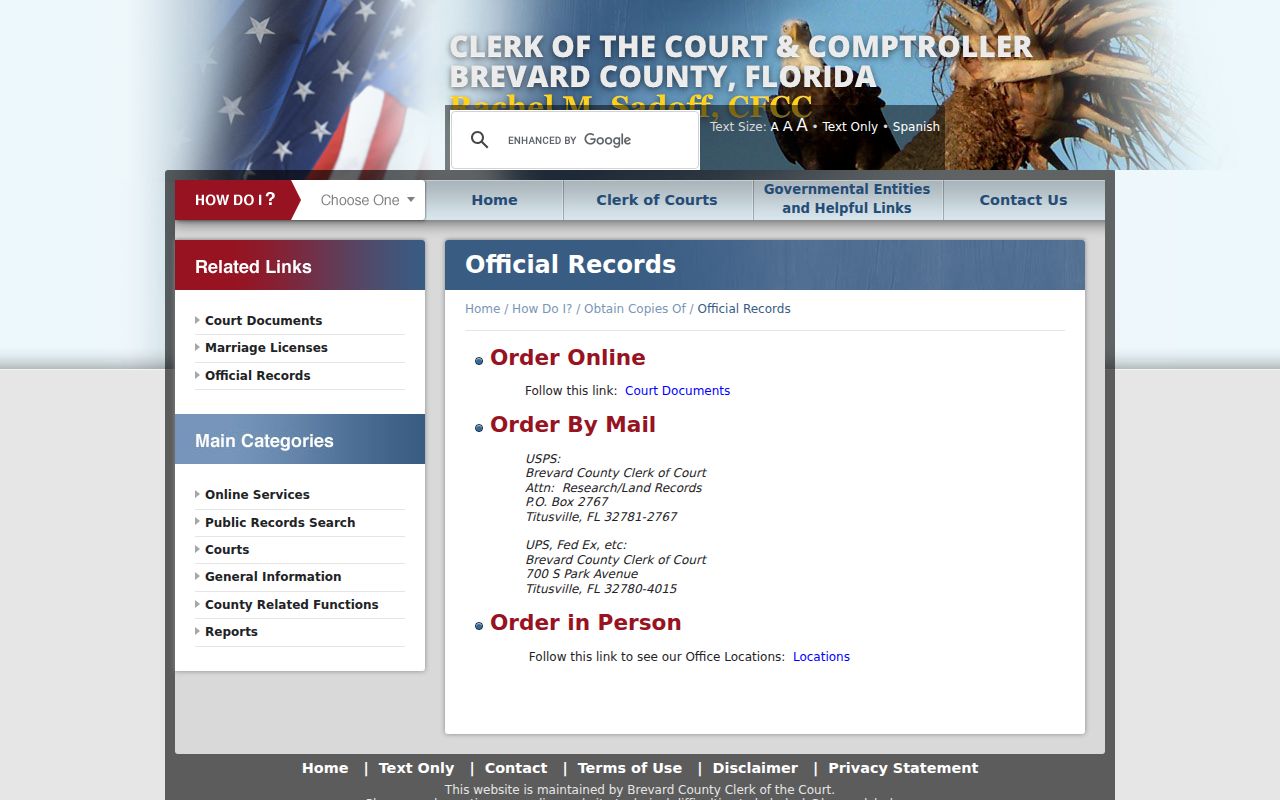
The screen is a useful reminder that a failed image link does not end an address-history search.
Melbourne Past Residents by Address
Hill-Donnelly criss-cross books turn a street number into a listed subscriber. Central Brevard Library holds runs for 1969 through 1985, 1987 through 1989, 1991 through 1999, 2001 and 2002, and 2004 through 2006. They search by address or phone, not by name. That quirk makes them valuable for finding previous residents, but telephone-listing bias means renters and unlisted households can still be absent.
Polk Melbourne-area volumes can add a spouse, occupation, employer, and residential address. The local holdings cover selected years from 1984 to 1999, with gaps. They also cover several nearby communities, so capture the locality heading with the entry. The full shelves and abbreviation rules belong to the Melbourne city directory collections; here, each entry serves as one dated point in the address trail.
Note: An absent name brackets a possible move; it does not establish an exact move date.
Pair Melbourne Directories and Census
Public federal schedules currently stop at 1950 under the 72-year rule. They can show household members, relationships, occupation, and tenure, while later directory editions supply dated subscriber clues. Do not claim a census and a late-century directory cover the same year. Use them as separate markers joined by deeds, obituaries, or other records.
- Normalize the historic street and decide whether the place was then called Melbourne, Eau Gallie, or another Brevard jurisdiction.
- Find the address in the nearest available reverse directory and record the exact subscriber spelling and phone.
- Search the nearest Polk volume for that surname, spouse, work, and address.
- For 1950 or earlier, use enumeration-district maps and the census schedule to locate the block and household.
- Confirm identities with a deed, probate file, death record, or obituary before drawing a conclusion.
An enumeration district was the small area assigned to a census taker. Its map can locate a street when an index misses a name.
Eau Gallie Changes Melbourne Searches
Melbourne and Eau Gallie consolidated in 1969. That event splits catalogs, directories, permits, maps, newspapers, and organization records. A modern northern Melbourne address may appear under Eau Gallie in older sources. Search both place names, retain old street directions, and use the parcel legal description or recorded plat to prove continuity.
Annexation and postal labels create a second trap. The same Melbourne mailing style can cover land outside the incorporated city. If a city permit search has no result, inspect the parcel's jurisdiction and ask the correct county or municipal office. This avoids treating an office mismatch as a gap in the history.
Physical Changes at Melbourne Addresses
Building permits and code files can date additions, demolition, repair, contractor work, and inspections. For an incorporated parcel, use the Melbourne Building Division or request a file by address, parcel, permit number, and date range. The research did not establish a safe online starting year, so ask staff about older permit jackets rather than assuming the web is complete.
A permit applicant may be an owner, contractor, manager, or agent. It does not identify every occupant or mark each move. Use the record to explain when the structure changed, then compare that date with a deed or directory entry.
Melbourne Household Trail Endpoints
Probate, an obituary, a death certificate, or a marriage record can separate people with the same name and connect relatives. The Florida Bureau of Vital Statistics provides several distinct products. Marriage and divorce certificates are public abstracts, while birth records under 125 years and cause-of-death details within 50 years have eligibility limits.
The successful state captures below show the separate certificate routes. Each record type has its own form, proof, fee, and delivery rules, so use the link paired with the needed event.
Check Florida birth certificate access when an eligible family-history request needs a birth record.
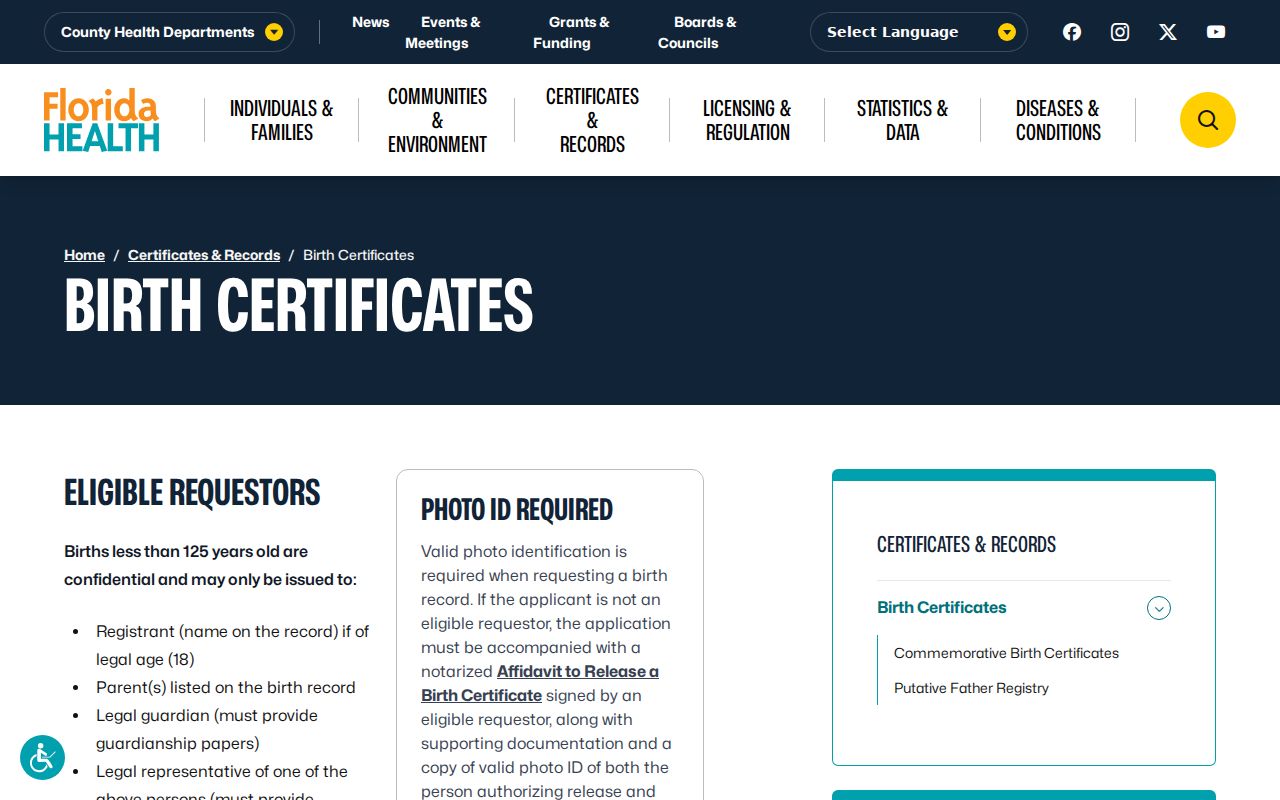
The birth route highlights why relationship and identity documents may be required.
Review Florida death certificate choices for a former occupant who died in Florida.
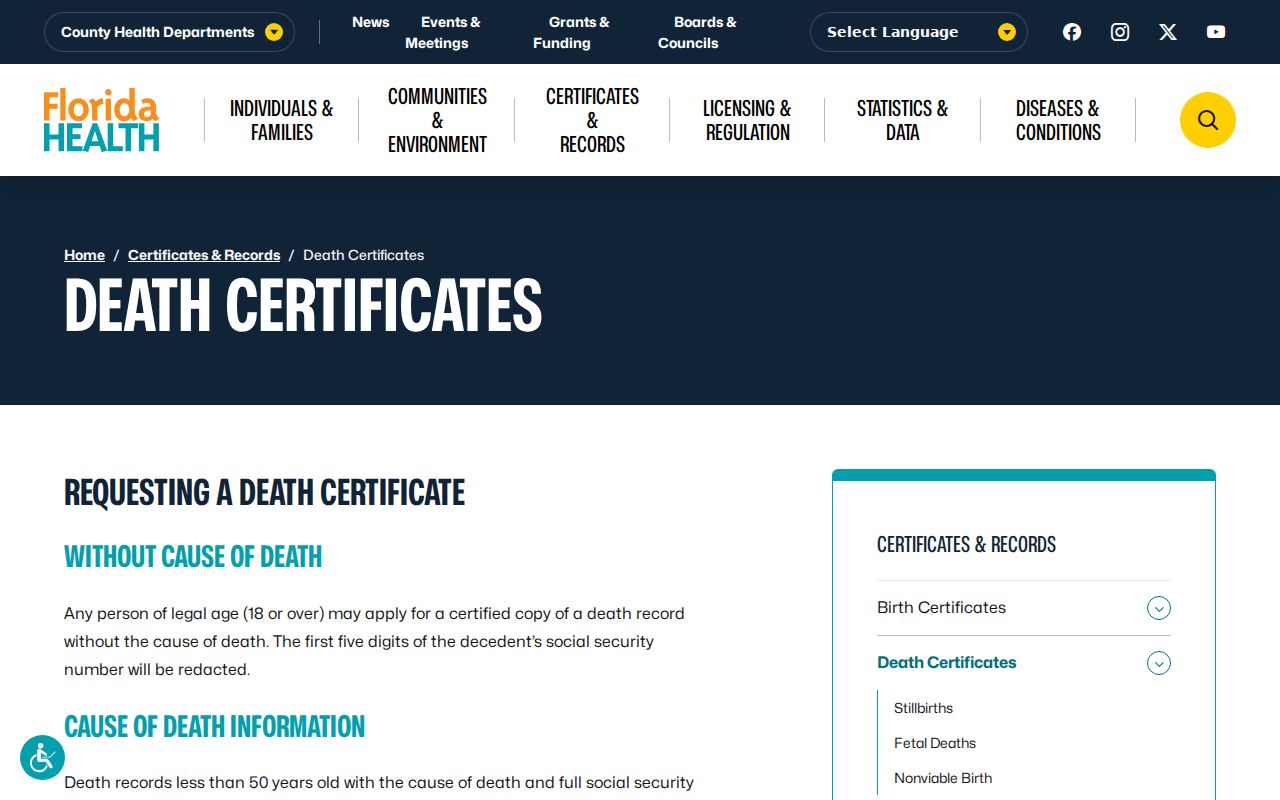
A without-cause copy may be public even when cause information remains restricted.
See Florida marriage certificate ordering information to test a spouse link found in a directory.
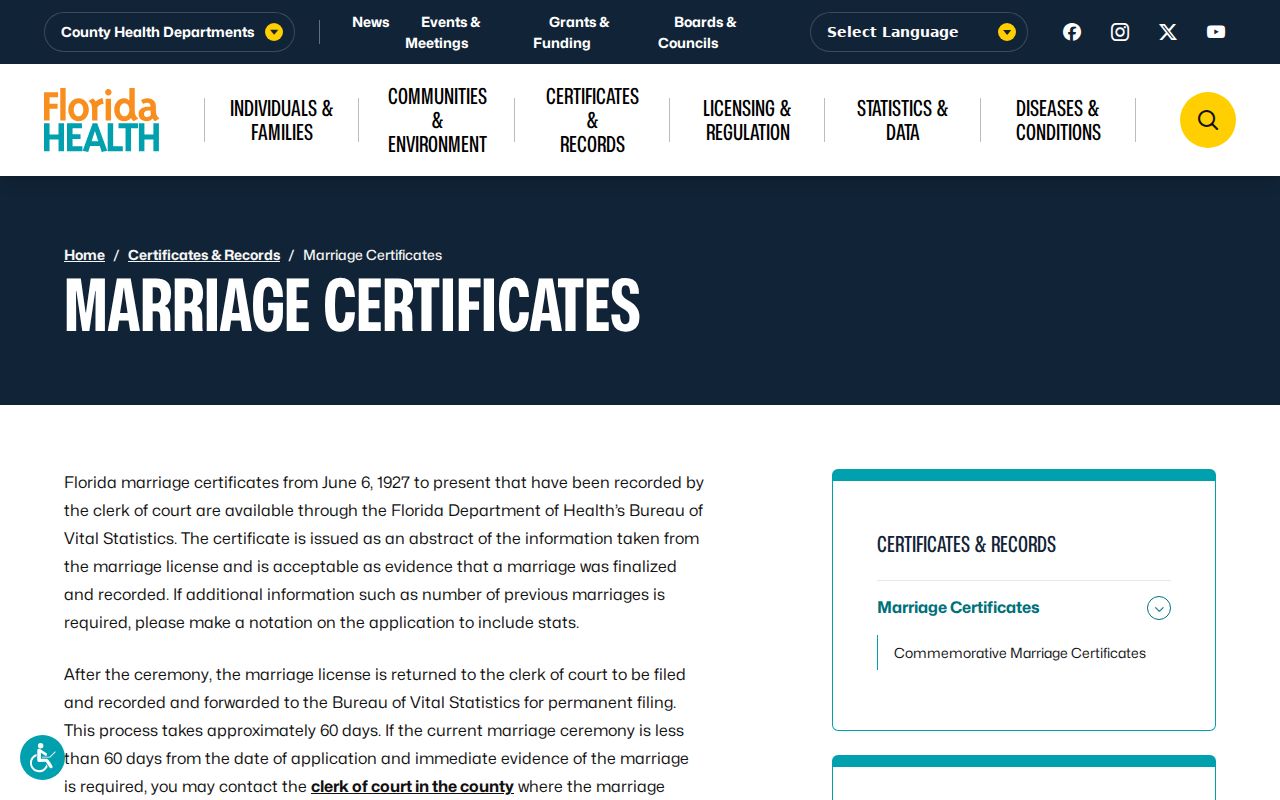
The state certificate is an abstract; a Brevard Clerk license packet can contain more detail.
Use Florida divorce certificate guidance for a dissolution clue.
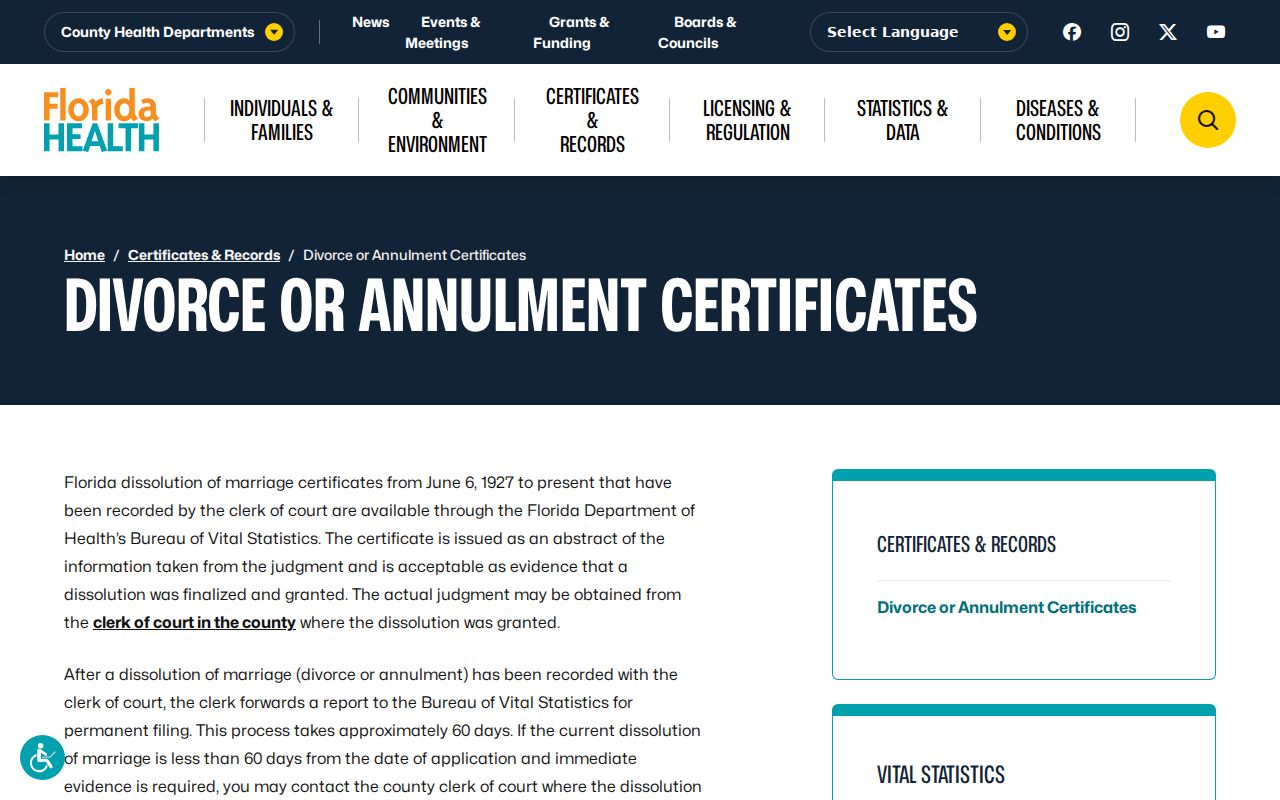
The Clerk's case docket and final judgment are separate from the state certification.
Protect a Melbourne Deed Trail
Brevard's free Recording Notification Service can watch both a person or entity name and a legal description. It emails an alert when a new official record matches. The service is not prevention, title insurance, or proof that a filing is fraudulent. Its value is prompt notice, followed by inspection of the actual document and contact with the Clerk or law enforcement if needed.
Review the Brevard recording-alert instructions and exact name-search format.
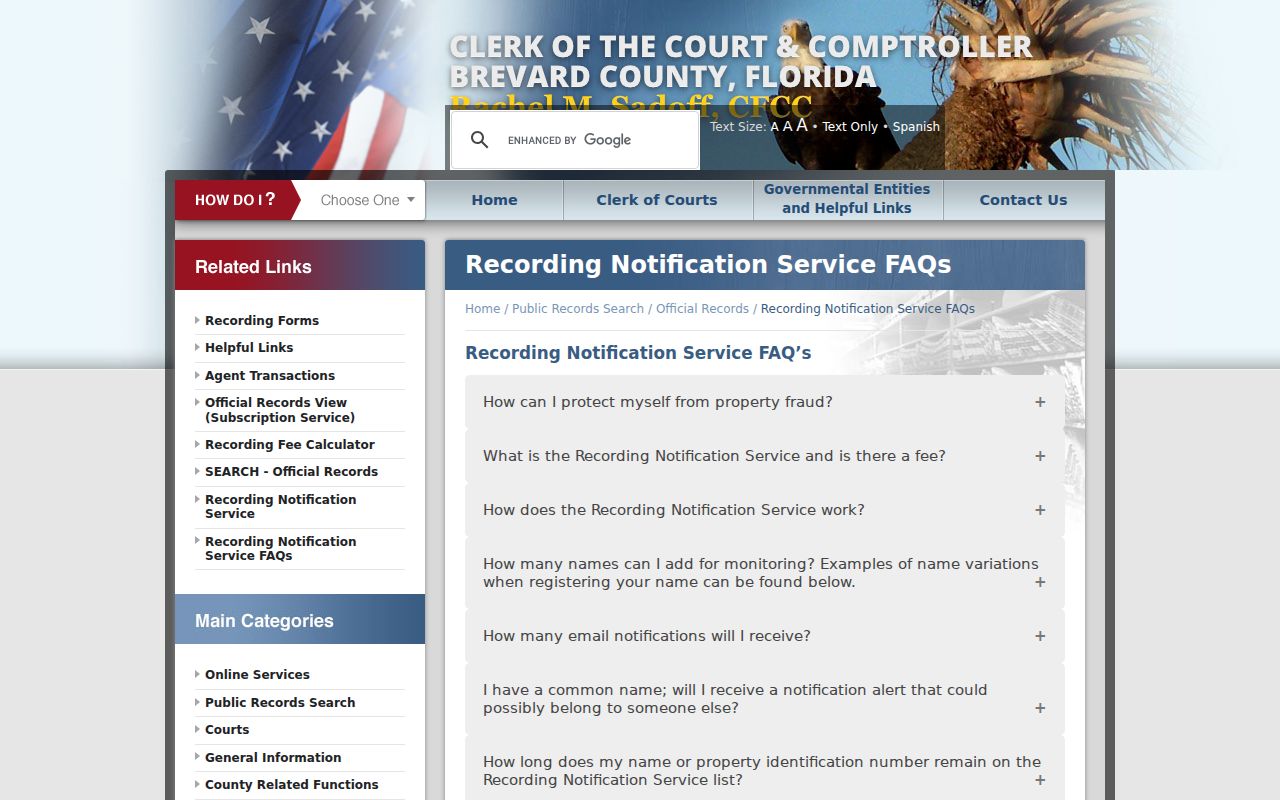
The alert can protect present research without changing any earlier deed in the chain.
Limits on Melbourne Previous Residents
Ownership, a listed telephone subscriber, and residence are different facts. Children, unlisted renters, visitors, and other household members may never appear in these sources. A trust or business on a deed is not a household. Protected addresses and sealed files are valid gaps, not obstacles to work around.
Use Melbourne previous residents research for house history, family history, estate questions, or consensual reconnection. Verify living-person details at the custodian and respect every access rule.
Lawful use. Never use past-resident records to track, intimidate, stalk, harass, or harm a person.