
Walk a Melbourne Street
A sound Melbourne street directory search separates ownership from occupancy. The Brevard County Property Appraiser identifies the parcel and titled owner. MapView places that parcel among its neighbors. A deed can prove when title changed, while voter information or a historical directory may supply dated evidence that a person used the address. No single result names every person in a home.
- Enter the address in the BCPAO Property Search. Save the situs address, parcel number, owner, mailing address, legal description, and latest sale reference.
- Open MapView and confirm the municipal boundary. Click nearby parcels or repeat the street-name search to move house by house.
- Use lawful voter channels for a dated registration clue. The personal county form verifies one voter; a public state extract is the route for sortable street data.
- Follow the deed book and page into Acclaim. Match the legal description before treating the instrument as the same land.
- For an older occupant, check Hill-Donnelly by street number. Use Polk by name when the year exists on the Brevard library shelf.
This chain works in both directions. An address can lead to an owner name, then to deeds and dated household evidence. A known name can lead back to a parcel, but common names demand another match such as a spouse, legal description, or prior address.
Search Melbourne Parcels by Address
BCPAO is the strongest first stop because it distinguishes the place being searched from the place where tax mail goes. Its current roll can also show values, exemptions, land and building traits, sales, and a map link. Search with fewer street tokens if a direction or suffix blocks the match.
| BCPAO field | Input | Use on a street search |
|---|---|---|
| Owner Name | Keyword text | Finds a titled person or entity regardless of word position |
| Site Address | Number and street | Locates the physical parcel; fewer terms can catch variants |
| Parcel ID / Account | Exact identifier | Returns the most precise known parcel |
| Subdivision | Name search | Groups parcels from the same recorded plat |
| Sales tools | Date, value, or name range | Narrows transfers when all fields for the chosen range are supplied |
| Inactive control | Checkbox | Lets the search include or exclude inactive records |
- Parcel
- A mapped unit of land with its own county account.
- Situs address
- The physical location assigned to the parcel, not the owner's mail destination.
- Plat
- A recorded map that defines subdivision lots, blocks, streets, and easements.
- Criss-cross directory
- A printed directory arranged by address or telephone instead of a person's name.
Map Melbourne Streets and Borders
A Melbourne mailing address can fall in West Melbourne, Melbourne Village, or unincorporated Brevard. MapView helps settle the question. Locate the subject parcel, turn on parcel and municipal layers when offered, and click the polygon to open its property detail. Roads, subdivisions, tax districts, aerial images, and planning layers add context, but the property roll remains the source for the owner name.
Manual browsing is the defensible block method. Zoom until parcel edges are clear, confirm the subject, then click each touching or nearby parcel. No official research source promised a one-click resident-radius export. The street directory should therefore preserve each parcel number and situs address rather than copy names from an uncertain map label.
Boundary tip. Use the parcel's municipal field, not its postal city, to decide whether Melbourne or another local government holds permits and code files.
Melbourne Records Indexed by Street
Address evidence sits with several custodians. The parcel number links the assessor, map, tax, permit, and deed trail. The legal description is even more durable when street wording has changed. These records describe ownership, registration, construction, or a listed telephone subscriber, and each must be labeled for what it actually proves.
| Address source | Keeper | Evidence supplied | How to reach it |
|---|---|---|---|
| Property roll and MapView | Brevard County Property Appraiser | Owner, situs, mailing address, parcel, legal description, map | Free web search or office help |
| Deeds, liens, and plats | Brevard Clerk Recording/Land Records | Parties, transfers, legal description, book/page | Acclaim from 1981; counter, books, or microfilm earlier |
| Voter registration | Brevard Supervisor and Florida Division of Elections | Public registration fields and districts, with protected records removed | Personal lookup or public extract |
| Permits and code cases | Melbourne or county office by jurisdiction | Dated applicant, contractor, work, notice, and case evidence | Online route, phone, or focused records request |
| Reverse directories | Central Brevard Library | Listed subscriber by address or telephone for held years | In-library volumes and staff help |
Link Melbourne Parcels to Deeds
Acclaim Official Records is indexed mainly by party and legal data, so a street address alone may fail. Start from BCPAO's latest sale or book/page link. On the deed, compare the legal description to the parcel card, note the grantor, grantee, recording date, instrument number, and consideration, then use the seller's name to look for an earlier purchase.
The free online index and eligible images begin January 1, 1981. Earlier land records did not vanish. Ask Land Records at 321-637-2004 for older grantor-grantee books, deed books, or microfilm, using the last known book/page and legal description. Search names as LAST, FIRST, use less information, and test spelling variants. The Clerk warns that only counter records are official.
See the Brevard official-records guidance before choosing a copy channel.
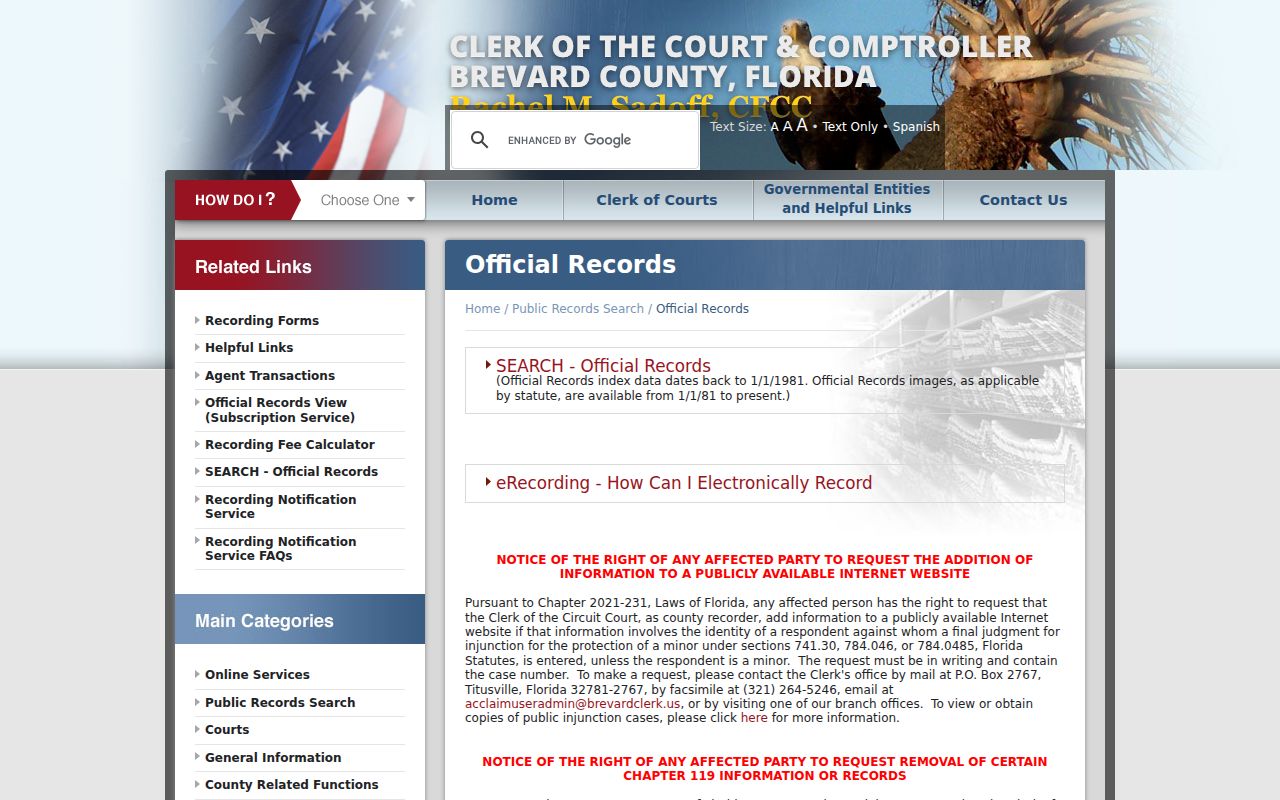
The captured Clerk page marks the official route for deed coverage, image limits, suppression procedures, and counter access when the online record is incomplete.
Voter Clues Along Melbourne Streets
Florida guidance lists a voter's name, address, date of birth, party, phone, and email as public registration information. Social Security numbers, driver-license or state-ID numbers, and the application source are closed. Signatures may be viewed but not copied. Address Confidentiality Program participants and qualifying high-risk professionals can also be suppressed.
The Brevard status form is a personal verification tool, not a street browser. A public monthly extract from the Florida Voter Registration System can be sorted by residence street after lawful acquisition, with exempt fields and protected voters removed. Active and inactive records run through the prior month, and voting history may lag another cycle. Voting history means credited participation, never a person's ballot choices.
Review the Florida voter extract request and its file layout before using registration data by street.
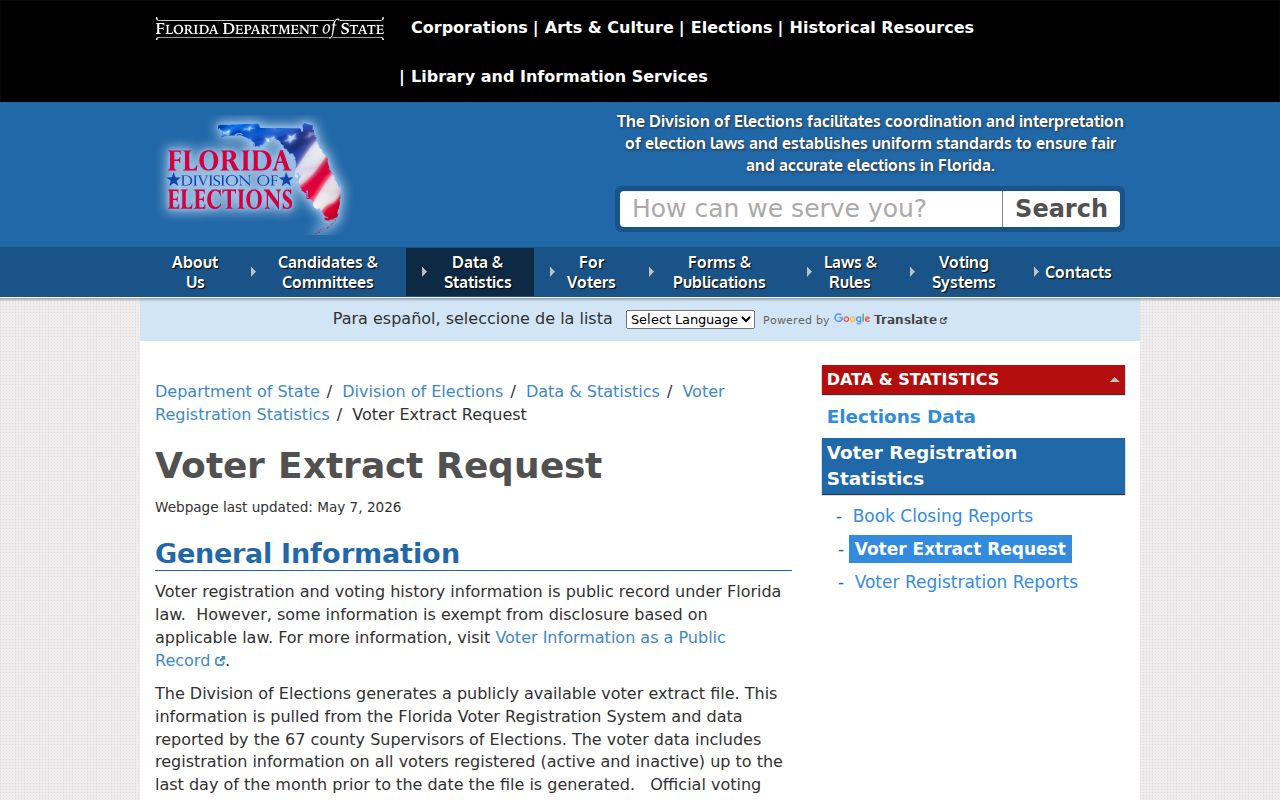
The state page shows the proper channel for a sortable public file and helps prevent the personal status form from being mistaken for a public street directory.
Melbourne Address Files Add Dates
Building permits and code files can attach a date, applicant, contractor, property owner, inspection, notice, or case result to an address. They do not prove that the named person lived there. Within city limits, Melbourne Building and Code Compliance share 321-608-7900. For an unincorporated parcel, use the county office instead.
Ask for a permit jacket or code file with the street address, parcel ID, permit number if known, a date range, and the desired status or disposition. The Melbourne public-records channel, phone, mail, and counter remain useful when a web search does not expose the file. Florida does not require a reason, a special form, or identification for an ordinary public-record request, though contact details help delivery.
Older Melbourne Streets in Print
Hill-Donnelly criss-cross directories turn a house number or phone number into a listed subscriber. Central Brevard Library holds county runs for 1969 through 1985, 1987 through 1989, 1991 through 1999, 2001, 2002, and 2004 through 2006. The gaps are real. These volumes are not searchable by a person's name.
Polk Melbourne-area volumes work in the opposite direction. The held years are 1984 through 1986, 1988, 1991 through 1994, and 1997 through 1999. They can add a spouse, job, employer, and address, but their coverage includes seven area communities. For the full shelf and entry method, use the Melbourne city directories resource.
Melbourne Streets Before the Merger
Melbourne and Eau Gallie consolidated in 1969. That event splits catalogs, permits, maps, newspapers, and directory headings for the same modern area. Search both place names when a northern Melbourne address disappears from one index. Postal labels, annexations, directional prefixes, subdivision changes, and street spelling can also break a plain address query.
A legal description or recorded plat is the best bridge because it follows the land when the mail line changes. The research found no official Melbourne street-renumbering chronology, so no date should be guessed. Old maps, ordinances, permits, and directories can document a specific change when one appears.
Limits of Melbourne Street Records
A parcel-owner list is not a household list. Renters, children, visitors, unlisted people, and other household members may never appear. An owner's mailing address may be outside Florida, and homestead is only support for an owner-occupancy claim. Utility customers and motor-vehicle addresses are not a public directory route. Protected voter addresses and confidential records represent lawful gaps.
A strong Melbourne street directory labels each fact by date and source. Two independent records are safer than one, especially when names repeat or a trust owns the land. Missing data should remain missing instead of being filled by inference.
Lawful use. Use Melbourne address records only for lawful personal research, and never to stalk, harass, threaten, or bypass a protected address.